


Show Notes
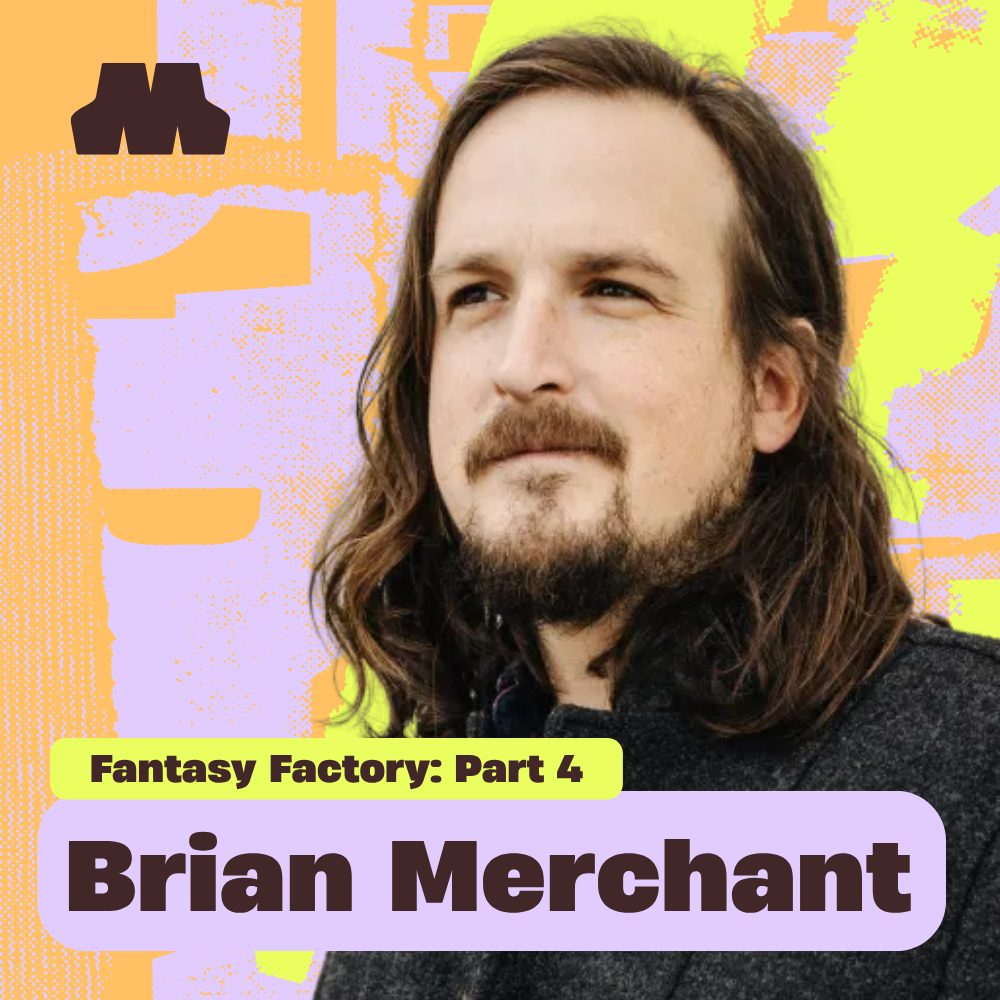
What better way than movies to help us process the world. Brian Merchant shares how our collective anxieties turn into cultural products.
More like this: One Filmmaker’s Fight Against AI w/ Valerie Veatch
Brian Merchant, author of Blood in the Machine, joins us this week to discuss his favorite unsettling, horror and thriller picks that bring our fears about AI and tech to life on screen.
Alix and Brian talk Terminator, Pluribus, and how even comedies about technology have a spectre of violence that helps us understand everything form labour exploitation to alienation to machine autonomy. All of this contributes to the role that film plays in helping us make sense of societal and technological change.
Click here to vote for us for the Webbys!
Further reading & resources:
- The best books, film, and TV about AI in 2025 — Brian Merchant, Dec 2025
- The Complete Guide to Luddite Horror Films — Brain Merchant, Oct 2024
- The Chair Company (TV show)
- Pluribus (TV show)
- The Crying of Lot 49 by Thomas Pynchon
- Exhalation and *The Lifecycle of Software Objects* by Ted Chiang
- The Most Aggressively Anti-AI Film of the ChatGPT Era — Brian Merchant on ‘Good Luck, Have Fun, Don’t Die’, March 2026
- The Comeback (TV series staring Lisa Kudrow)
- Mrs Davis (TV series about a nun on a mission to destroy AI)
Computer Says Maybe is produced by Georgia Iacovou, Kushal Dev, Marion Wellington, Sarah Myles, Van Newman, and Zoe Trout
Transcript
Alix: Hey there. Welcome to Computer Says Maybe. Before we get into this week's conversation, I have some exciting news. We have been nominated for a Webby Award. It is our first nomination and we are up for best technology podcast, which is a huge honor. Just even being nominated. Um, so a big thank you to everyone who listens and shares the podcast.
You can also help us win The People's Voice Award by voting for the show, and we'll leave a link to vote in the show notes. But let's get into today's episode because if you are a fan of movies. And you are also someone that thinks about AI politics. You are in for a treat. This week's guest, Brian Merchant, who is, I don't know, I think of him as the author of Blood in the Machine, um, with a blog of the same name who talks a lot about labor rights and protections and labor movements around the introduction of new technologies.
But he's also kind of a media critic if you sign up for his newsletter. Every couple of months or so, he'll shout out interesting films or series or books he's reading. And because we're doing this fantasy factory series and have talked to Valerie Veach, a documentary filmmaker, um, we wanted to dig into a little bit of fiction and how cultural products and stories get told that help bigger and bigger audiences kind of process what they think about technology, even if it's not bang on the nose.
A documentary. And so I reached out to Brian to see if he'd be up for just like talking about, um, how he thinks about film and how film has helped him process, uh, what he thinks about technology. And you might ask, you know, what's a Luddite horror film? Um, well, we dig into that. And more in this conversation.
And we also geek out on today's contemporary movies and TV shows that are reflecting our sort of current fears. And, uh, I don't know, we just like nerd out on things we've watched that help us understand what's going on. So you are about to get a lot of great watching recommendations. If you're already [00:02:00] excited, feel free to head to the show notes with Brian's complete recommendations that come up in the conversation.
And without further ado, dim the lights, grab your popcorn. Lights, camera, action. With Brian Merchant,
Brian: when I was researching and writing the book, blood in the Machine about the Ludi. Rebellion. One of the biggest surprises that I found was that the Luddites had influenced directly the romantic poets and then wrote influenced Mary Shelley in writing Frankenstein a little bit more indirectly, but certainly the times and the critiques that they raised of technology and of.
The particularly reckless way in which certain wealthy industrialists were unleashing it and developing it and paying for it, and commiserating the working class. And the process was quite salient, and it's also one of the biggest legacies of the Luddite movement, I think culturally speaking anyways, is that they helped inspire this kind of [00:03:00] critique and this kind of cultural mode of storytelling.
Science fiction in a lot of ways is constantly grappling with the social dimensions of technology and how it's being unleashed or, you know, deployed by those who, who have the influence and capital to do so. And so, yes. So part of my work now, I think, you know, the main thrust of it, it's still an ongoing concern.
I'm always looking at what books are coming out. TV shows what movies especially, especially TV and movies. I don't get to watch it all. I don't necessarily, I don't have the time, but I'm always interested in the ways that like, sort of our mass media are reflecting anxieties over technology, over ai, over the class that is developing and selling and profiting from these technologies.
So yeah, I guess that's maybe a long-winded way of saying, I'm always looking at it. Um, in fact, I think one of the first. Sort of such pieces I did for the newsletter was sort of a best of [00:04:00] rundown of, of what I consider sort of Luddite horror movies. Not like the, you know, the misnomer Luddite, the actual Luddite, which also in my book, if you're not familiar with it, one of the main thrusts is trying to rehabilitate the Luddites says people who are quite justified in their actions against technology and their resistances to technology and their questioning of who technology is actually benefiting and who it.
Harming. And so with that as kind of a rubric, I ran down some of my, I forget if it's 10 or 15, of what I considered the best Luddite movies and specifically Luddite horror movies. Films like Alien, I think is a great. Critical sort of Luddite horror movie in that it's all about working class people trapped in an environment where they're totally controlled by a corporation that has access to ai that is in pursuit of, of dangerous.
Alien technology as a means of war [00:05:00] making and then they are subjected to the whims and of, of this corporation and its ai. Yeah.
Alix: The AI technology chooses to put their lives at risk in pursuit of the corporation's objectives and like manipulates them and to continuing to do so. It's actually really, yeah, it's a great
Brian: example.
One, 100%. I mean, you watch it through this lens again, and so the movie opens and. The first dialogue is a labor dispute, right? Even among the ship workers, there are lower tiers, and it's sort of like the maintenance guy who's kind of haranguing the, the ship captain about back pay and how he is not getting paid.
The whole movie precedes on these terms of like ordinary working people who are at the whims of these forces, and yeah, as you say, one of the pivotal scenes is that Ripley, who kind of intuits that. They're being put in danger. And when the crew returns after the alien, the face hugger is implanting the, the seed and the alien.
The, she refuses to let him in 'cause it would violate quarantine and sort of [00:06:00] scientific protocol and it would endanger the crew. But the AI overrides that and then again, subjects them all. And you know, the AI reroutes them to put them into danger in the first place. So it's ultimately a blood and guts horror movie.
There's a lot going on in The Alien is one of my all time favorite movies, but very good
Alix: movie.
Brian: It's, it's fantastic. But yeah, that is to say that like, you know, if whether or not people come out of the movie theater going like, oh, that was a really strident corporate critique. It does sort of embed these.
Suspicions in a mass populace, or it reflects where we were at in the late seventies as there was a, you know, a new sort of technological revolution coming underway with personal computers. And you know, what's going on with the military industrial complex at the time. And there, there's all these undertones.
Alien is a good example. I think I also include some more cartoony examples where it's like Event Horizon, it's kind of a famous space horror movie. Yeah,
Alix: yeah. Another quite, I find Event [00:07:00] Horizon quite terrifying.
Brian: Yeah. Where they watch the, like the video of what happened to the last crew and they're all like clawing each other's eyes out.
But at the heart of that movie is also, you know, Sam Neil. Of Jurassic Park fame is this scientist who essentially invents a technology that opens a portal to hell. You have this very loaded and unsettled kind of metaphor. The hero, Lawrence Fishburne, who's the captain of the ship, takes one look at it and.
Alix: Absolutely not.
Brian: Yeah. We have to, we have to blow this thing up. So like, that's what we need to do. We need to destroy it. Right? So like it's, that's like probably the most straightforward example of a, of a, of a ludi horror film. Like the bad guy wants to, you know, or he's not even necessarily evil, but we don't get into his motivations mud, but he invents the portal to hell Technology.
It's supposed to be like a open, a wormhole that lets you do faster than like traveler, whatever. But it opens the portal to hell in the process. You know, he's working for a corporation that does it.
Alix: He kind of [00:08:00] becomes, throughout the film, more and more disconnected from reality and he almost seems more robotic through the movie as well, where like, towards the end, his decision making, it doesn't seem like he's all there or has agency, which is also like a, I
Brian: think he, yeah, he's been possessed by hell or by the devil, or by the demonic forces that are attendant to his hell portal opening.
So yeah, it's a, it's a pretty, pretty blunt. Condemnation of, you know, almost like the Frankenstein thing. Like somebody creates a technology that unleashes untold horrors. And then of course, like the rational thing to do when that happens is to destroy it to, you know, abort, abort, abor. Yeah. Like, let's not go down this path.
It's kind of rare actually. Only when it's a technology that is completely removed from sort of our actual social conditions. Do we have the capacity to allow the heroes to say, blow that up? And yet, but then that moral dimension shines through really, really strongly. There was a, uh, a bad Ryan Reynold.
[00:09:00] Movie a few years ago, I forget maybe the Adam Project, I think it's called. They invent Time travel and he like meets himself or whatever. The bottom line is, once they understand what they've done and the ramifications that it has, they're like, this was a bad idea. We should destroy this and eliminate any of like the capacity for this to exist.
'cause it's just too much of a threat to the human world and everything we hold dear, so they decide to eliminate it. We could also pick out a few more if you want. I think David Cronenberg, his work has constantly been very techno critical, as it were. Video Drone is the one that I picked out as just being remarkably prescient about media technologies and the way that they insinuate themselves into our lives and the need to to be critical of that.
The Fly is a similarly leadite techno. He has a movie about VR that few people have seen called Existent or Existence. With like Jude Law, it's kind of a sleeper, but, but also a good one. [00:10:00] So yeah, you could check out the whole, the, the whole list for some recommendations.
Alix: There's also some newer ones feel less horror oriented and more like social oriented.
And I don't know if that's, um, I know there are other films that are coming out that mix that horror genre. Tales of technology gone wrong. Um, but it feels like, and maybe it's just because we've as a society, been processing this stuff more explicitly that there are more social and cultural products that aren't in that genre.
Are there others? I mean, you mentioned Pluribus in your newsletter, which I've fucking loved, I thought was so good. Um, but are there others that you think of that are less. Less
Brian: horror. Yeah,
Alix: for sure. Like less horror, like less harsh, less like overtly negative or like emotionally intense and like kind of with this like kind of specter of violence or explicit violence.
Brian: I mean, it's often, you know, accompanied by that specter of violence because
Alix: Yeah.
Brian: You know, it's always.
Alix: Yeah, just around the corner,
Brian: I mean, but you look at the sort of, again, the root of all of this is [00:11:00] Frankenstein, where you know the Frank Frankenstein's monster is first sort of struggling to reconcile his creation and his relationship to his creator who has abandoned him.
And pretty soon the spectra of violence hangs over everything that he does too, as he eventually sees no other recourse and is kind of fully and finally abandoned by Victor Frankenstein. There's a reason for that too, right? Which is that we intuit the harms that technology being imposed on us might cause, or that's our anxiety.
Whether it's a physical harm in the context of industrial automation or something like that, or it's something that you know, is more like psychically violent. The threat of losing our jobs or losing agency or being put under the thumb of a, of, of a, of a corporation or institution that we have little recourse or freedom to react to.
So these are all things that do tend to kind of [00:12:00] manifest violently. And then it's just, I think, prime pickings to sort of depict them as such and to plan those fears. So yeah, recently Pluribus is a really interesting example because yeah, the threat of violence. Is, well at first it's quite a violent event where everybody kind of keels over and when they're transferred into this hive mind.
Pluribus is interesting. Some people aren't necessarily sold, but it is a critique of ai. But it certainly seems that to me. I mean, that was the first thing that I saw.
Alix: It's also very like ea logic that they wiped out like 5% of humanity to get them into the Borg. Um, in that first like. Episode scene or whatever.
Um, but that, that's worth it because ultimately, like the, the human condition is improved, uh, for 95% Right. Of humans, which is worth it. Yeah,
Brian: yeah. Right. Can't you see that? Can't you see that this is better? Uh,
Alix: yeah.
Brian: You know, if, if we're, I think it does resonate with people on that level for that reason, right?
Like, this thing is being [00:13:00] foisted on us and no matter the costs that we can see with our own eyes, like we're all just being told. That it's gonna be great.
Alix: And also some people like it, which I also find like I found that like twist that of the people that haven't been converted that like actually most of them would prefer to have been converted because they would prefer that state.
Brian: I have some kind of complicated feelings about the way that that's treated. Polling or whatever shows and, and kind of my experiences in the wild is that it's much more starkly divided like that. There is, I think ai, you know, there are obviously people who are excited about it and there are people who, whatever, find it useful in certain contexts.
But then there are so many people who, who just kind of have a knee jerk intuitive rejection of it. And it's more 50 50 and some of the things in PLS that it seems to suggest that like maybe certain. Cultures are more adept to accepting ai and it's like kind of like the American, just like, I'm not gonna take it.
That's true. Yeah.
Alix: Yeah. The [00:14:00] enterprising, individualist American who actually has a soul. Yeah,
Brian: right.
Alix: Of course. Yeah, yeah.
Brian: Yeah. I mean, it is interesting that like the most sort of in enthusiastic adopter of the Pleiss AI is this like gross, wannabe Playboy guy who just has. Makes the AI be become sexually servile to him and recreates movies with the, it's all very juvenile and very sort of a male dominated fantasy.
So it's really good on that front. But yeah, like less, I guess less horror. Are we talking just AI criticism or tech criticism in general, or you,
Alix: I don't know. Just stuff you find gives you a portal into understanding the politics and culture around these issues.
Brian: I think that my favorite show that did that last year was, I use that phrase, specter of violence hanging over it.
This show certainly has it, but the, the chair company, I don't know if you saw the chair company. Oh my god. Yeah.
Alix: God, it's so intense. I known It's so stressful.
Brian: Oh, it's so, I mean, even [00:15:00] Tim Robinson's straight comedy has that effect where it's like very stressful to watch too. And this said, this definitely has kind of a.
At least kind of an implied horror element to, or more like maybe like a lynchian kind of vibe to it.
Alix: But yeah, it's like weird and disorienting and foreboding, but not in an explicit way. And it's just like this weirdness.
Brian: But I think it ultimately is in service of really conveying sort of, you know, the alienation, you know, not just.
Technology, but you know, modern society writ large, I guess how it's unfolding and he just kind of can't connect with anybody. And so he spends all of his time kind of pouring himself into this sort of like Ian pursuit of meaning like through like symbols he finds online, well I was watching this anyways, I was thinking of the crying of Lot 49, quite a bit where she just in pension's book, you know, ed Pmaa seeing all this symbology and she's.
Traveling around [00:16:00] trying to chase down secret societies, and it's never fully conveyed to the reader or in the chair company's case, the viewer how real a lot of this stuff is. And it doesn't sort of necessarily condemn the practice as too conspiratorial because. It accepts that we as a product of our being so alienated from our work, from our families, by all these like digital intermediaries, by all of these sort of new social structures that have sprung up, that there are like legitimate grievances that we can have.
And you know, Intuit that maybe some chair company does have this negative impact on our lives in ways that we can't fully discern. I mean, it's really funny the way that it, that he does it. He's looking through like the stock photography and that that populates the website. The red, the
Alix: red, yeah,
Brian: the red ball.
And, but I thought that that was like, you know, last year that was another, um, alien Earth. We already talked about alien, alien earth shows. Have you noticed,
Alix: because I was thinking about Alien being in the seventies and that basically the [00:17:00] commercialization of media and the sort of, the way that sequels have just become this.
I don't know. Bizarre. Uh, they've had a bizarre cultural effect, but they're a financial instrument for these media companies. If over time you feel like those types of film franchises, gut, the more interesting questions of power and labor and, and ludism,
Brian: I mean, usually I think that that would be the case, certainly something like.
Like the Marvel Universe, just, oh God, yeah. You would never, you would never look to it to have any kind of content. I mean, I think it's impervious to, you know, any kind of registering, any kind of general critique of anything. But Alien is interesting in that it. Early on, the modus operandi of the, of the franchise was established that like you'd get one movie to make it your own and then you'd kind of do with it what you will, and it wound up.
So you know, the first one is Ridley Scott's horror film. [00:18:00] It's just basically horror and space. You know, you have a confined, you know, corridors and it's like jump scares. Then James Cameron takes aliens and turns it into this sort of action bonanza where, you know, guns are blazing and it's a very different kind of, and it very much retains and plays with that sort of that corporate critique in different ways.
You know, Paul risers. The slimy company man, who again endangers them all brings them to the colony that's been overrun by aliens. And so that current still runs pretty strongly. And in fact, I have like a long gestating piece that I've been meaning to do about how Alien in particular is interesting because it almost.
After those two movies were such a success that it kind of inspired the subsequent directors of the films to sort of try to find new terrain to take on so you can make a case that Alien Three, which you know famously is one of the less successful movies in the franchise. And [00:19:00] it was, you know, David Fincher's first film.
Originally working from a, a William Gibson script takes on the prison industrial complex or like, you know, an incarcerate what the alien kind of, uh, means for, for the prison industrial complex. So it, it, it, I do feel like Alien is almost, has resisted it. The last one was a little less, what was it, Romulus of Rom alien.
Romulus, yeah. I think it fell victim a little bit to the ation or whatever you wanna call it, where it. It felt compelled to try to draw from, you know, the component parts in a way that muddled any, uh, ultimate message that it, that it might have had it, you know, but like the Alien Earth TV show is a little.
You know, kind of similar, like I, you know, it's interesting in some ways it gives you more story about like the actual kind of politics of the world, but it doesn't linger on that as much as you would like. And I like find, like it's treatment of Androids is a little bit less, less interesting than it seems to think it is.
Where it's like children, [00:20:00] you know, AI who sort of have to grow up. Although even that is almost like a tiny kind of rejoinder too. This sort of, you know, craze right now that we're about to reach super intelligence and it has to be done now, and it's like, it seems to be working from this idea that AI might have to take time to learn.
It kind of reminded me of that Ted Chang story, the, the lifecycle of software objects, which kind of. Deposits, this counter AI craze, vision of AI as something that's most people just won't be that interested in. Ultimately.
Alix: I wanted to talk to you a little bit about humor in this also. 'cause I feel like, I can't remember if it was you that mentioned this stuff, but there's also these like, are you familiar with the stuff?
Brian: Uh. Rings
Alix: a bell. It wasn't you. It's an eighties, early eighties film. I had never heard of it until someone brought it up in the context of generative AI critique. But basically the premise is that there's this stuff that is sold and if you eat it, it like, basically [00:21:00] it's kind of like a, um. Oh God, what's invasion of the body?
Snatchers plus, uh, this material substance, if you imagine like the thing plus that plus it, like everyone wanting it, so it being sold in these like ice cream containers that people want to eat. It just looks absolutely ridiculous as a movie. Uh, I watched the trailer, it
Brian: just was, it wasn't me. I, I am looking at this now and I'm like, how have I, how have I not seen this?
This looks
Alix: well, welcome. Looks
Brian: amazing.
Alix: But like there's this something about eighties humor, old school, like ludic, crispness and like humor. Also, I feel like that we, I would love to hear more if there's like cultural products that you're like, think do a good job of. Telling the story in that way.
Brian: There's a bunch of 'em. There's one called Chopping Block. It's a about about a mall. It misnamed, but it's about a mall that has a security system that goes haywire and they turn into terminators and [00:22:00] terrorize the teenagers who are partying in the mall after hours. And it kind of works as this sort of, you know, both send up of, of.
Consumerism and sort of the technologies that have been erected to protect and safeguard consumerism.
Alix: Similar you, that's making me realize Max remember, um, maximum overdrive as well.
Brian: Yes. Um, no. Yeah, that's a, the, another good example. It's in the mold of, uh, I think it was the second dead movie, Dawn of the Dead, which took place again, not slick at all, but again, it's like this very anti.
Anti consumerist politics coming through as it did in a lot of Romero's films. And you have a lot of the zombie movies that kind of play up on this in a, in a lot of ways. Like it was newer than like Reaganism and Thatcherism was. This new, more novel construct and people were able to maybe laugh it off.
It hadn't gotten a, it was such a widespread foothold yet. I don't know. I'm just speculating here. And, and so it [00:23:00] was, you have a lot more of, you know, low budget films, kind of TV shows, you know, sticking it in the, you know, the Max Headroom show with cyberpunk kind of trappings. But it was constantly portraying the world, which was 20 minutes into the future in his later eighties as.
Being one sort of like overrun by, uh, corporate prerogatives and surveillance and computerization and, you know, people were kind of like fighting back from the trash fire Wastelands the first Terminator movie, pretty low budget affair. Terminators just, I think probably our most potent modern Frankenstein, uh, movie rights.
Skynet. We got slick with Terminator two, but I sometimes kind of think that the first Terminator is maybe even the more effective movie 'cause it just kind of. Gestures towards, you know, what could come, uh, if you seed too much agency to these destructive machines in the military, industrial complex and all that.
And ai, you know, implicitly, you know, Arnold Schwartzenegger is the killing machine powered by ai. Of [00:24:00] course. I feel like there's a ton of good, good eighties kind of, uh, reaction to, to all that.
Alix: I feel like you also in your last newsletter or like the last newsletter with like this kind of rundown list, I think end of year, last year, you mentioned a lot of nonfiction books and I'm wondering, most of the books that I pick up now that are nonfiction on this topic usually have these extremely compelling character driven lenses.
So like, you know, you read. Karen, how's book? And you're like, you get insight into Sam Altman's character via this story. And also Dario Amad died like, like it's about the people. Or you read careless people and it's like, oh my God. Like you, it's almost like made for TV frame and I wonder if you have thoughts on.
As cultural critique goes or as writing goes when we try and make those narratives driven. What that does, like, does that make it, because it introduces entertainment, it increases the number of people that understand the kind of cravenness of these people? Or does it kind of make it into entertainment in a way that might make it feel.[00:25:00]
Not serious, but like more about like these single people rather than this like big structural thing.
Brian: Yeah. Well, I mean, I think you need both and I think you were served by both, right? So like, I think there, you know, there's no shortage of, you know, critical and. Academic skewing, it's true books about, about ai.
Uh, so
Alix: like better are bang on about the structural issues. Yeah.
Yeah.
Brian: Right. And so, you know, having, having books that, you know, obviously the Empire of Ai Karen Ha book, which really was great. And I think especially when done well, it, it can articulate the critique in a way that resonates and is stickier maybe for a lay reader, certainly than just kind of a treatise.
You know, why AI is bad in, in this context or that, so I, yeah, I, I think that having a narrative and having the story and in, in both. Cases, you know, that you mentioned there, that it's true. So it's a reported story of what Sam Altman and OpenAI and Amdo and [00:26:00] what we're we're up to and how we landed in this world.
It was a bestseller, so it's clearly resonated. Uh. On a level that, that probably helps lodge those critiques further into the, you know, the mainstream or what have you, than, than some other more academic works might be po but you need both, right? There's no empire of AI without a ton of academic, uh, and critical work being done on data centers being done on, you know, precarious labor being done on ghost work and, and that kind of stuff.
So, you know, I, I think AI is, and not at risk of being under examined right now. So if anything, I think more. More narratives that do kind of, you know, illuminate critiques via, via narrative would be welcome. I mean, certainly it's kind of what I, it was a question that I had to deal with or, or grapple with, with the blood in the machine.
A book, when I first started writing that book, it wasn't originally going to have a narrative [00:27:00] structure following, like what happened when. Originally it was going to be kind of more of a treatise about why the Luddites matter and why they were justified in doing what they do. But I just, I felt personally that it would, you know, be more effective and maybe read by more people and maybe interest more people if, if it did have a narrative structure.
And then I did kind of. Maybe somewhat clumsy thing and just kind of like embedding some more critical passages in between the chapters about what was going on in the modern day. Um, so, you know, I guess it's up to the reader to decide how effective that actually was, but it was certainly,
Alix: I think it was effective.
Brian: Oh well that show.
Alix: Oh, one readers take. So anything you're excited about being released this year, film-wise or book-wise or TV series wise that you're like keen to watch?
Brian: One thing that just came to streaming and I would be, I'm curious to hear what you know, your listeners might, might think of this, so there was that.
I argued recently that it was [00:28:00] maybe the most sort of staunchly and resolutely anti AI film yet. I mean, 'cause you know, the AI boom is what, three years old now? Typically, you. It takes a few years to, to, to make a movie and make tv. Obviously, some of the things that are in the air before are still totally salient and will, you know, will, will show up in ways that are easily identifiable or gra or sort of graspable as critiques.
But I'm interested in seeing like what starts to come out as people, the very same people who are extremely alarmed about AI start creating longer tail culture products and I think it feels like one of the, one of them is. Good luck. Have fun Don't Die. Which was Gore Binky's film. It's, I wouldn't call it a great movie, but it is, and it, and it, and its critique does skew into the reactionary, but it is one of the first films of the, of this modern era.
I guess you could include maybe Del Toro's Frankenstein in this [00:29:00] as like direct sort of repudiation specifically of AI to the point where one of the characters says, you know, something like, you know, fuck this and tries to, and blows it up at the end of the, of, of the film and it's where it's not, you know, the hell.
Portal that we talked about earlier, or a time travel device, it's actually AI that, that they're just like, you know what we need to do? We need to just blow this thing up and the, and the, and the kid who's making it or whatever, that has just come out to streaming. And I would be curious to see what people think of that.
'cause it, it is, again, it's not the most nuanced critique, but it did to me. It's evidence that there is more of a, of, of a straightforward kind of, uh. Denouncement possible in film and tv.
Alix: I didn't know it was available for streaming. I'll watch it. Um, 'cause I really like the trailer and I really love Sam Rockwell.
He's really funny.
Brian: Yeah, he's good in it. You know, it kind of, the moon, you know, it kinda gets a little bit lost in itself. It's definitely worth a watch, certainly if you're, if you're in this space or if you're in the interested [00:30:00] in, in, in AI or sort of critical landscape there. It certainly has interesting ways of interfacing with that.
Alix: Cool. Okay. Well we will link to your newsletter in the show notes. Um, 'cause I presume that you're gonna continue sharing these lists and stuff that you read and watch and like, um, and people should, I think, engage in more of that. And I feel like it feels like such an entanglement with all the politics of it is like a under understanding.
It better ourselves, but also understanding how the general public is receiving it and processing it feels also really important. And finding cultural touchstones to start conversations also feels like a really good entry point to conversations that I think can sometimes be overly intellectual and actually making it more fun to have conversations about this stuff using media.
Feels smart.
Brian: Yeah, I do. I I do too. With the, with the caveat that like, it is an interesting moment for, you know, the media landscape in general in that a lot of the sort of executive class of the media companies and the film studios and all are still [00:31:00] kind of open to ai. They're kind of maybe like the idea that it can maybe.
Cut their labor costs and serve as leverage over the unions and so forth. So there's gonna be some constraints on what actually gets made on, uh, on the larger scale. I, I'm, I'm interested for instance, to see how the latest comeback, the sitcom. You want a non nonviolent more, but, so the latest least curos.
Sort of, uh, sporadically recurring TV show. The Comeback, which is this, one of which was a, one of the pioneering kind of fae, you know, documentary comedy kind of TV shows about her staging these comebacks through her career as a fictional actress. The most recent one is she's going to work on. TV show that's been written by ai.
So I I, and it's, it seems like it's true. I didn't
Alix: know that was the premise. I've seen her like trip and fall in a very Lisa Udra way in like the, in the promo trailers. Yeah, exactly. But I ha I didn't know that that was the premise. That's really good to know.
Brian: Yeah. [00:32:00] So something like this, I feel like will be an interesting barometer.
Like are they willing to. Go all out in the critique of, uh, of ai? Or is it just gonna be kind of something that's fuzzy? Also, little scene, uh, Damon, uh, Lindel Off's, uh, last show, which was called Mrs. Davis, and it was, I feel like it wasn't his biggest hit, but it was about, it was about a nun who
Alix: Oh,
Brian: sort
Alix: of, I.
Yeah,
Brian: Uhhuh,
Alix: weird
Brian: strange show. Like I actually enjoyed it, but it also, and it was kind of, it came in right as the AI boom was beginning, and so it was like, it, I feel like if it came out now, it would probably get a lot more play. I think it was 2023, but ultimately its message is, yeah, like spoiler alert, the, the AI is birthed, uh, accidentally through like a Buffalo Wild Wings app and it takes over the world.
And she, and in, in no uncertain terms, like her mission is to, [00:33:00] to destroy it, to unplug it. And so like it's, again, it's like a, it is a kind of another very ludi. And again, I don't know. It's, it's just another element to think about, like the timeline where it was before. This probably got made, you know, before the studios were having all these negotiations with major AI firms.
Alix: Yeah. I didn't realize it was coming. It was season two was coming. That's exciting. I actually really liked that show.
Brian: Yeah,
Alix: it
Brian: was cool. So I didn't realize that either. So I'm hearing it here for the first time.
Alix: Maybe it's Google Auto Complete being wrong. Hang on. No, it is Google Auto Complete being wrong.
There is no season two. Uh, it's uh, it's in negotiation probably. 'cause they're like, damn it. If we had released this a year later. It would've been like a really big hit. It
Brian: would've been a hit.
Alix: And it's like, it's really bummy. Its,
Brian: it was so weird that we don't know if we can sell people on it. And yet it's so resonant, like how do we, I'm sure they're trying to, but yeah.
Alix: Figure that out. Yeah. Um, cool. Okay. Well I feel like maybe we should have another one of these as more stuff comes through. 'cause this is really fun. Um, yeah. And it was, uh, great. Uh, cool. Okay. Well thank you. This is awesome. [00:34:00]
Brian: Thanks so much. This was fun. Yeah.
Alix: All right folks, if that conversation didn't wanna make you host a tech horror movie night, I don't know what else will, but if you loved any of the movies or shows we discussed, give this episode a share.
And thanks for listening. And if there's any others that you want to chuck out as, uh, films that. Help helped you understand what's going on in the world or just our cult classics, um, that you think everyone should watch and talk about. Let us know next week. We are kicking off a very different conversation.
Um, we are kicking off a new series. Focused on AI and the military. I guess we're on the theme of dystopian horror. It's a, a good one to stay tuned for, so you can look forward to that next week. And then there will be a few weeks focused on that subject, looking at it from a variety of different angles.
That hopefully help you better understand what current events are teaching us about this much longer arc of history and trajectory of integrating technology into war. [00:35:00] Okay? So stay tuned next week for the militarization and AI series, and thank you to the computer says maybe podcast team who make this show happen every week.
Sarah Myles, Georgia Iacovou, Van Newman, Kushal Dev, Zoe Trout, and Marion Wellington. And with that, we'll see you next week.
Stay up to speed on tech politics
Subscribe for updates and insights delivered right to your inbox. (We won’t overdo it. Unsubscribe anytime.)

