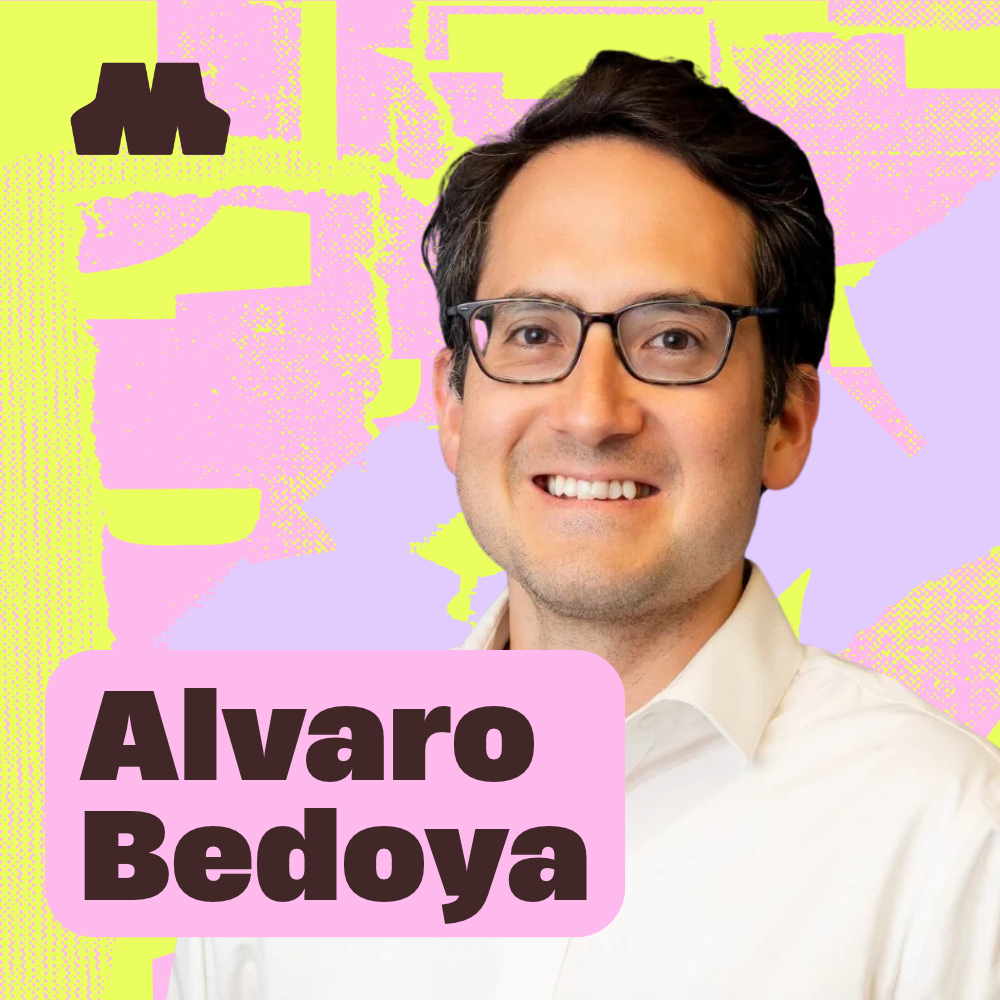
The Urge to Merge: Reclaiming Competition in an Economy of Giants w/ Alvaro Bedoya


Show Notes
Those at the top all know each other. The workers fighting the same fights against them and their monopolies, from taxi drivers to farmers to filmmakers, never meet. This episode’s guest thinks that’s why corporate power keeps winning.
More like this: The Gig is Up: How Uber Ruined Wage Labor with Veena Dubal
In this episode, Alvaro Bedoya, former FTC Commissioner, explains how spending his travel budget on farmers, small business owners, and union members turned him into an economic populist. He makes the case for rebuilding the Farmers Alliance model of cross-industry coalitions, shows how an Iowa farmer’s Facebook post tied the Paramount/Warner Bros. merger to the fight in agriculture, and says the Ellisons’ media empire and the AI boom are both bets by people with too much power and too little judgment.
Further reading & resources
- How I Became a Populist — Alvaro Bedoya, The New Republic
- The Workers Who Defy Gravity — Alvaro Bedoya, Washington Monthly
- Billionaires could ruin the movie industry — and people are FURIOUS — More Perfect Union
Join The Maybe Collective to explore the politics of technology through curated content and thoughtful conversations. Sign up for monthly insights, access to exclusive digital events, and real ways to get more involved on issues you care about.
Computer Says Maybe is produced by Kushal Dev, Marion Wellington, Van Newman, and Zoe Trout
Transcript
Alix Dunn: Welcome to Computer Says Maybe. I'm your host, Alix Dunn, and I'm really excited about the conversation we are having today with Alvaro Bedoya, who is one of the people I think of when I think who is fighting for the rights of workers, the rights of everyone in this kind of epic moment we're in, where the balance of power between companies and everyday people feels more and more tilting towards concentration of power, towards elites, towards unaccountable, um, corporate control over so many aspects of our lives.
Alix Dunn: And I'm just really pleased to be able to talk more with Alvaro about the work that he's done and how he's sort of entering and sustaining this fight
Alix Dunn: So Alvaro, I mean, I thank you Um, it's really nice, um, to get to dig in a little bit more into what you do and kind of how you got to where you are. Um, do you wanna tell me a little bit about how you got into this? Like, how would you describe the kind of through line of your work, given it's had so many iterations and, and phases?
Alvaro Bedoya: I, uh, was born in Lima, Peru. Uh, came to the United States when I was five years old. We moved to Upstate New York in 1987, you know, um, spent first to 12th grade in, uh, in Vestal, New York, which is a great place to grow up. And college, uh, law school, I was... You know, it's funny. I- in, in, you know, uh, primary, secondary, I considered myself Peruvian.
Alvaro Bedoya: I didn't really consider myself an immigrant or Latino 'cause I didn't really know kind of the bigger categories.
Alix Dunn: Mm-hmm.
Alvaro Bedoya: And I went to college, went to law school. I was like, "Oh," like, "I am Latino," you know? I... You know, there's this broader immigrant community, you know, 'cause in Vestal we just had these two or three other families who happened to be Peruvian, and my parents chose to go there because there were these families there.
Alvaro Bedoya: So professionally, I started being really interested in the experiences of, of, of other immigrants, and so I spent a year and a half of my life researching the lives and the working conditions of, um, Peruvian sheepherders in California and Nevada who were brought here on the H-2A guest worker program.
Alvaro Bedoya: That was a really eye-opening experience for me. Uh, in between college and law school, I decided to, uh, work with my father, who had moved, uh, by then back to Peru, as a researcher for the International Labour Organization Special Action Programme to combat forced labor. And in a nutshell, in college and law school, I was really interested in how this country treats its immigrants.
Alvaro Bedoya: A- after law school, I went to work for a massive corporate law firm for two years. You know, met my best friend in the world, but, um, started a college scholarship, but was otherwise totally miserable. It was this part of my life where I would wake up and, like, the next thing I would look forward to is lying back in my bed.
Alix Dunn: Oh, God. So
Alvaro Bedoya: dark. It was just two years, though. Uh, and I got the chance to work for Senator Franken. I was his chief counsel o- on his first day in office, you know, staffed him through the Sotomayor hearings, the Co- Kagan hearings, two Supreme Court justices, and then I got a chance to start a think tank at Georgetown that focused on this intersection of privacy and civil rights.
Alix Dunn: Mm-hmm.
Alvaro Bedoya: But up until this moment, I was a pretty, you know, what I would now call, like, normie, uh, liberal. You know, I'd grown up on the East Coast. I was pretty traditional East Coast liberal. I was really concerned, you know, with race and, and, and, uh, uh, immigrants and, and I still am. You know, I still care about those things and, and I still think racism is real, but that was, like, a...
Alvaro Bedoya: That I thought was, like, the central problem facing our country, like, racism, systemic racism. Uh, and then I think two things happened, um, one that I don't, don't normally talk about, and hopefully my, my wife won't get mad at me. Uh, uh- ... but, um, you know, I met this amazing woman from Louisiana, uh, and, uh, fell in love with her.
Alvaro Bedoya: We got married. We had kids. But through her, I met her family in Louisiana, and it's real hard to have preconceptions and bias about people from the South when you become part of this, like, sprawling, beautiful, loving, hilarious, you know, joyful Louisiana family. You know, um, you, you, you're from Louisiana originally.
Alvaro Bedoya: Um, Seema talks a lot about how in Louisiana, unlike Washington, DC, where the moment you meet someone, within 30 seconds, they're like, "So what is it you do?"
Alix Dunn: Yeah.
Alvaro Bedoya: And then they do the scan- Yeah ... where they're like, "How useful are you to my purposes?" Totally. And then-
Alix Dunn: Slightly looking over your shoulder.
Alvaro Bedoya: Yes.
Alvaro Bedoya: Yeah. And in Louisiana, I learned, she would tell me, and I learned, like, you could go years without knowing what someone does. You just know that, like, you do cookouts with this person, and crawfish boils, and, um, they're amazing and, and fun, and they ask you about your family, and they care, and they check in on you, and they just do great kindnesses for you.
Alvaro Bedoya: Um, and I was just exposed to this part of life in this country and these amazing people who, if you grow up and you go to the schools I went to, you develop real bias about people from the South, you know? And I came to appreciate much more The discomfort that a lot of people had on the right with a lot of the identity politics that I have, and to a large degree still have, you know, now- Mm-hmm
Alvaro Bedoya: where these folks weren't Black or brown or, or any, any, you know, any one of those other categories, and they would walk into rooms in the East Coast and there would be lots of assumptions made by them that were not good, you know, by people who otherwise consider themselves very, you know, justice-minded.
Alvaro Bedoya: And it was this great check on me where I was like, "Okay, all these things I kinda thought were true, um, maybe not as true as I thought they were." Uh, and then the second thing that happened was I was nominated to the FTC, and, um, Federal Trade Commission, the antitrust, uh, consumer protection authority.
Alvaro Bedoya: This amazing thing happened where I got this, like, small travel budget, and most commissioners, no disrespect to them, there's reasons to do this, they spend it on going to, like, industry conferences- Mm-hmm ... or conferences of other law enforcers. But what I decided, uh, 'cause I'd been caricatured in my confirmation process because, you know, in social media I'd called the president, like, a white supremacist.
Alvaro Bedoya: Um, and so I kinda decided when I got in, like, uh, no, forget all the, all that stuff. I'm just gonna go spend all my time with actual small business owners, actual working people, l- labor unions, actual farmers, and that's what I did. And two things came into focus really quickly. Number one They all had the same problem.
Alvaro Bedoya: Maybe it was their suppliers of seed that had consolidated. Maybe the software duopoly, you know, was Epic Systems for the, for the doctors, you know, and maybe it was Uber and Lyft for the- Mm-hmm ... rideshare drivers. But the problems were the same. And number two, no one gave a fuck about my politics. You know?
Alvaro Bedoya: I thought, "Well, I'm this, like, Latino guy from the East Coast, and I've said these things about the president. Like, I'm gonna go into these, you know, conservative red areas, and people are gonna be like, 'What's up with you?' You know, like, you know, 'Do you dislike us?'" No one, no one cared. No one cared. What they were saying was, "Thank God you're here.
Alvaro Bedoya: Please help us. We are drowning." You know? There was no, you know, clocking me and my politics and my identity that, that I thought would for sure happen. It was just, "Help us right now. We needed help two years ago, 10 years ago. Where were you? Thank God you're here now. Let's talk."
Alix Dunn: Your piece, um, in The New Republic that you wrote about how you kind of slowly came to become- Yeah
Alix Dunn: a populist-
Alvaro Bedoya: Yeah ...
Alix Dunn: is that it's through understanding individuals that you then construct a worldview- Yeah ... that you then can, like, work through and find a way to, to kind of change a- all of our surroundings. Yeah. And I think that it's this, I don't know, like, we're in this moment where it feels like the intellectualizing and attempt to find shortcuts- Yes
Alix Dunn: whether you're, like, an engineer or, you know, a campaign staffer of someone trying to win a Senate race somewhere, that, like, that era is just, like, over. Or like- What era? Like, the era of, like, clean, precise, engineered, um, we can make the world different by, like, our, using our brains- Uh-huh ... and, like, not using our relationships.
Alix Dunn: Amen.
Alvaro Bedoya: Yes.
Alix Dunn: Um, and I think we're, uh, like, this attempt to shortcut and, like, I don't know, if you think about, um, the innovation in Obama-era elections- Yeah ... of, like, finding small-dollar donations- Yeah ... and organizing infrastructure in a way that had never, it had never been organized before, it, it, like, it's...
Alix Dunn: Noam Chomsky says, "Tactics have a half-life," which I think a lot about, and it feels like that tactic of, like- Using technology to get lots of people to give me a little bit of money so that I can then run ads to try and, like, basically do these big pushes- Yeah ... and, like, not actually have to, like, relate or understand or- Yeah
Alix Dunn: like, actually genuinely connect. Yes. That era I think is over. Mm-hmm. But a lot of people are still using these tactics.
Alvaro Bedoya: Yes.
Alix Dunn: And then you see some people that are emerging that, like, get that, like, you have to be able to show up in a space and have conversations and listen to people's stories- Yeah ... not just for them to feel heard- Yeah
Alix Dunn: but for you to be able to actually appropriately diagnose what's happening. Yes. And, like, how... Like, it doesn't surprise me that people didn't care about your politics. They're like, "I need help." Right. And, like, there's a... I don't know. I feel like we're in this moment where there are people that are emerging that understand that and see people in a way.
Alix Dunn: And I think in some ways one of Donald Trump's biggest successes is that people feel seen by him even though he's looking right through them. Yeah, yeah. Um, but there is a, um... I don't know. I'm like, I find it very exciting that we're, like, returning to this idea that to help people you have to, like, understand them, and you have to, like, care about them, and you have to genuinely engage them, and you can't just I don't know, like run your spreadsheet and be like, "If we send enough emails in this district, it'll convert this number of people."
Alix Dunn: We're gonna message our way out of this. I know. Yeah. But like I, I, I find it really heartening, and I think- Yeah ... like what you're descri- the process you've gone through feels like something other- Yeah ... people are going through as well.
Alvaro Bedoya: For me, what is interesting and where the, I find like magic is, is in breaking bread with people who are radically different, and in creating those one-off connections between people, and in getting them to meet each other.
Alvaro Bedoya: Like this, this is what I see- Mm-hmm ... as the, as the big problem we face right now, is that the people at the top, they all know each other. They summer in the Hamptons or Aspen. Um, they m- meet in Sun Valley or Davos, or it used to be Dubai, you know. And their kids all know each other. Their kids all go to the same schools.
Alvaro Bedoya: They are friends or frenemies or some combination of that. The people at the bottom literally never meet. You know, the ri- the New York Taxi Workers Alliance here in New York like does not meet the Iowa Farmers Union, even though they are both battling in pitched fights with software monopolies or duopolies, right?
Alvaro Bedoya: The filmmaker, you know, in Burbank literally never meets, you know, the soy farmer or, you know, cow-calf operator, even though it's the same problems. They're suppliers of archival footage, uh, and they're suppliers of seeds, and they're buyers of, you know, soybeans, you know, or meat processors, you know, or the buyers of documentaries.
Alvaro Bedoya: They've all... It's like literally the same problems, but they never meet. They literally never meet like this. And What I am trying to figure out is how to get those folks to meet- Mm-hmm ... in a very small and real way. If I were a young man, I don't... 44 now, like if I were a young man, my project would be to recreate the antitrust leagues of the late 19th century.
Alix Dunn: Give us a little bit of that history.
Alvaro Bedoya: We got the populist movement because there was a group of farmers, um, in the Farmers Alliance in the South. Uh, and there was the Grange Movement, and that was a separate movement. Um, but the Farm Alliance did this thing where they reached out to, um, urban factory workers.
Alvaro Bedoya: They basically looked at the fat cats of Wall Street, and there were fat cats on Wall Street, and they were business owners, and they were, you know, they, they were, they were... There was an argument that the farmers were more like the bankers than they were the urban workers. But the farmers in the Farm Alliance said, "No, we're going to reach out to the urban laborers of, of our day, and we're gonna break bread with them, and we're gonna seek common cause with them."
Alvaro Bedoya: They even, this is in the shadow of the Civil War, these are Southern farmers. They tried to reach out to Black sharecroppers in the South and say like, "Hey, let's team up against these banks." And they had middling success, but they did this thing where they looked across industries and said, "Hey, we are more alike than those guys up there.
Alvaro Bedoya: Let's join the same team and fight those guys." And that is the birth of the populist movement in this country. And they painstakingly built that coalition. They had-- They didn't have social media, they didn't have email. You know, they had these presses, these local presses, and they had lecture circuits, right?
Alvaro Bedoya: Back then, there was no... I forget when the radio was invented, but they-- I don't think it was invented yet. Um, they had, um, they would send lecturers just, like, who would travel, uh, you know, large swaths of the country and give the same lecture over and over again. And that is how they, connection by connection, built this populist movement.
Alvaro Bedoya: I would work on recreating that. Like, right now, we have this amazing democratic infrastructure- Mm-hmm ... you know, grassroots infrastructure in Indivisible chapters, for example. Mm-hmm. We have labor unions, right? But what we don't have is a way for citizens of any, you know, of any industry- Mm-hmm ... to unite with people in other industries of common cause, small business owners, the remaining farmers we have left, and say, "This is the fight we wanna go."
Alvaro Bedoya: Well, not against an authoritarian government, but against, uh, an authoritarian, you know, set of corporate conglomerates. Mm-hmm. You know? And, and so there is no unit of civic organizing for that. That's what I would focus on recreating. And what I'm trying to do now is do that o-on an almost artisanal scale, like stitching that together by creating this economic exchange program, by creating delegations of people.
Alvaro Bedoya: You know, so one thing we're working on now after the Block the Merger movement against the Paramount/Warner Brothers merger is there was this amazing moment where there was a farmer in Iowa who I, you know, y- I couldn't have planned this, you know, just out of nowhere, posted on Facebook, like OG Facebook, like, "Hey, I see those people in Hollywood.
Alvaro Bedoya: That happened to me That happened to me. All my suppliers consolidate, all my buyers consolidate, and we're just getting squeezed. Mm-hmm. And I see how what's happening to them is what happened to me. Very simple thing. And had, you know, the Ellison's not, you know, outfoxed us by their amazing friendship with Gavin Newsom, um, w- we were working on a delegation of people from that coalition to go meet with the Iowa farmers and say, "All right, what fights are you in?
Alvaro Bedoya: We'll tell you what fights we're in. Uh, we'll tell you how we won, we'll tell you how we lost. How, how might we be able to work in the future together?" So trying to create those delegations, trying to create those summits even, and trying to piece together link by link these friendships of the individual, you know, worker, farmer, small business owners.
Alvaro Bedoya: That, that's what we're trying to work on now.
Alix Dunn: When you describe someone going and actually literally traveling from place to place and giving the same lecture over and over again to essentially create a kind of shared understanding of what's happening and analysis that can be portable and can kind of essentially like till the ground to be able to plant organizing that will, will lead somewhere.
Alix Dunn: What we have now, rather than that direct heavy investment in like, you know, literally bringing information to local- Yeah ... communities is an information environment that is managed by people who obviously don't want that connection to take place, um, because they don't want their power to be challenged.
Alix Dunn: And I wonder if you could reflect a little bit, I mean, partly on the concentration of the industry that manages our information environment, but also like the politics of some of that, that like it is so dominated by the right that when you think about who is effectively drawing those connections between individuals, organizing, essentially like building power around issues, it's mostly right-wing ideologies that are successfully radicalizing people, connecting them, having them feel like they're part of this thing that has momentum.
Alix Dunn: Um, and I wonder, like, when you think about antitrust leagues and you think about, like kind of to, to repeat that strategy or repeat that approach, given how the internet works, like how do you connect those two things in your mind? Or like- Yeah ... what effect do you think that our current information environment has on that?
Alvaro Bedoya: I have a slightly different take on this. Yeah. And I'm curious what you think about it. So I think there's two layers to it, and I actually think that the layer you're de- you're describing is real, but is almost less pernicious than the other layer, which is agnostic to politics-
Alix Dunn: Mm-hmm ...
Alvaro Bedoya: but is just like about eyeballs and engagement.
Alix Dunn: Yeah.
Alvaro Bedoya: So, um- Let me give you an example out of the Paramount/Warner Brothers thing. So we did these town halls. Um, so one of the problems in these corporate power fights is they either don't get covered or to the degree they're covered, they're covered in, like, trade journals, like the farmer jour- you know, uh, the Ag Press, the Labor Press, or the Financial Times and the Wall Street Journal.
Alvaro Bedoya: Or if they get a little bit of mainstream coverage, it's elite versus elite. Mm-hmm. So it is, it is like this fight becomes, um, the Paramount/Warner Brothers fight becomes, uh, oh, you know, MAGA billionaires versus Hollywood millionaires, like Mark Ruffalo- Mm-hmm ... versus, you know, the Ellisons. And, um, what that elides, and I think Mark Ruffalo himself would think this, is all the people who are screwed, who are actually going to get hurt in a very real...
Alvaro Bedoya: who are gonna lose their livelihoods if this thing goes through, number one, they're not only in Hollywood. You know, the, the film and television industry, and this is another sad, I don't know about sad, but, but, but long and, and, and, uh, um, complicated story, is now everywhere. You know? It is in Jersey City.
Alvaro Bedoya: It is in Savannah. It is in Louisiana. Um, the other thing is that most people who work in this industry are blue collar, or if they have a union cl- uh, card, they're maybe middle class. They're small business owners. And, and you don't hear from them. Mm-hmm. You don't hear from those people. And so we did these town halls in two independent movie theaters, the Lumiere Theater in LA and the, um, Plaza Theater in Atlanta, and then we did w- another town hall in the Writers Guild East, um, headquarters here in New York.
Alvaro Bedoya: And, um, we got a lot of good video, and then we partnered with More Perfect Union, we're like, "Hey, just use all this video."
Alix Dunn: Mm-hmm.
Alvaro Bedoya: So they, as they do, produce this amazing, you know, three-minute video.
Alix Dunn: I saw it. We'll, we'll link to it in the show notes. Yeah. It's good.
Alvaro Bedoya: And what I noticed recently was, um, 'cause I was going back, I was like, how many people did we reach by that?
Alvaro Bedoya: So I was like, you know, I'm, I'm, I'm old and, and I'm off the short form video things 'cause my brain already is, is rotted out- ... from X and Blue Sky and, and LinkedIn, which are the so... you know, the poisons that I choose. Um, uh, and so, but I was like, no, I gotta get on Insta and TikTok and, and YouTube. I, I'm on YouTube, but, like, you know, I need to see how it's done there and, and, and I was like, okay, YouTube, like couple hundred thousand views.
Alvaro Bedoya: You know? Three hundred thousand, let's say, four hundred thousand. You know? Um, Insta, same thing. You know, three hundred thousand, four hundred thousand. Then I go on TikTok, and it's like fourteen thousand views, and I was like, wait a second. What? And I was like, oh, oh, oh, the Ellisons own TikTok. They literally own
Alix Dunn: TikTok.
Alvaro Bedoya: They own TikTok. Like, these guys just throttled it. Um, and so what you said is true. It is true But I would, we will only get at part of the problem if we don't realize there is something, in my view, much more pernicious, which is like, "I don't care about politics. I don't care about this. I care about making money and keeping these eyeballs on my platform."
Alvaro Bedoya: And what persistently sells is keeps people, keep, keeps people's eyes on the screen are, um, division and fights.
Alix Dunn: Mm-hmm.
Alvaro Bedoya: Right? And playing on people's anxieties. Okay? And so, and let me give you... So like everyone knows the division and fights, but let me give you this other example, um, that, that I've noticed.
Alvaro Bedoya: So like I'm 44, like my hair is thinning at the top, right? So I was sharing this with, with, uh, with Ben yesterday, right? And, and look, like this is, like God made me this way. Like this is the way life is, you know? But I was on OG Facebook because that's how I, you know, see my friends from high school. And, you know, you get these ads for like hair loss on Facebook.
Alvaro Bedoya: And like I dwelt like three extra seconds on it, right? And now I go on Facebook and like all the ads are like- ... like, "Does your wife love you?" You know? And like, you know, like, uh- It's so dark ... all, all, all the other anxieties that like- Yeah ... men with thinning hair- Yeah ... the algorithm thinks they have. Like that shit is dark.
Alvaro Bedoya: And do I think that like Mark Zuckerberg, you know, is sitting there being like, "Oh, like we're just gonna, we're gonna, we're gonna get in people's heads, and we're gonna play on their anxieties"? No. He's like, "What we're gonna do is like maximize the algori-" You know? Yeah. It's much more like, "I don't care.
Alvaro Bedoya: I'm just gonna ride, you know, whatever keeps people's-" Yeah, they're agnostic to the fact of the
Alix Dunn: content.
Alvaro Bedoya: They're agnostic. Yeah. They're agnostic. Yeah. And, and if we don't appreciate that, that fundamental problem, we're only gonna get at one slice of it. Because yeah, I mean, I don't think Mark has politics, honestly.
Alvaro Bedoya: Like, I think some people have politics, like Peter Thiel, I think that guy has politics. I don't think Mark has politics. I think Mark's politics are his, his bank account.
Alix Dunn: Yeah.
Alvaro Bedoya: You know, and hence he, he, he-
Alix Dunn: His agnosticism also serves Thiel's interests. So like, like I think that there's a- Yeah, yeah ... there are people with- Yeah
Alix Dunn: capital- Right ... that have politics- Yeah ... that are investing in ways that give them a return- Yeah ... but also further their politics- Yeah ... because there are these downstream also billionaires- Yes ... who basically are not- Yes ... interested in politics, but are more than happy to- Right ... pursue the most toxic business model imaginable, um, that has the wonderful ulterior, like outcome- Yeah
Alix Dunn: for the people that do, I think, care.
Alvaro Bedoya: Yeah. Yeah.
Alix Dunn: But no, I hear, I, I wonder the, so 'cause I think you, you think a lot about mergers. One thing that I was struck by, 'cause I hear you on if it's succeeding to bring people to the platform, then that's enough even if the substance is, you know, supportive of their politics- Yeah
Alix Dunn: or not. But then you see things like, um, Barry Weiss's ascendance at CBS- Yeah ... where you can see that that's not helping them get viewers. That's not- Yeah ... helping them- Yes ... actually make money. Right. There's another political project there- Yes ... that is more important to them- Yes ... which feels partly about dismantling, um, institutional brand that could be seen as, like, public interest journalism.
Alix Dunn: Yeah. Basically like just, like, rip apart any symbol that is remaining Yes ... of, like, legitimate sources of information. But it feels, uh, so I'm k- kind of curious, when you think about that example or you see some of the other things that Ellison is doing, like they are doing certain things that undermine their business for the purposes of pursuing a politic.
Alvaro Bedoya: Yeah. And, and to be honest with you, I've never been able to get a bead on, on what exactly is going on and what it probably means that, like, there's a number of purposes. Yeah. You know? Um, it could be that Larry Ellison has a set of interests and David Ellison, his son, who runs Skydance now, has a overlapping but slightly different set of interests.
Alvaro Bedoya: Um, because there is an argument that the transaction makes no financial sense.
Alix Dunn: Yeah.
Alvaro Bedoya: Uh, and, and actually Wall Street is, is, um, is valuing it in that way now. So the- Interesting ... combined market shares of Paramount, of the merged company which is now called Skydance, the, the combined market cap of that company is now significantly lower than what was the market cap of-
Alix Dunn: Of them separate?
Alvaro Bedoya: Warner Brothers. Yes. Warner Brothers Discovery- Interesting ... and Paramount's guidance. And look, like, I, I don't think this is a great comparison because, like, the market's weird. The market thinks the economy's amazing right now. It's shit. Yeah. You know? Um, and, uh, and so, like, the market is just one of many b- ways to value something.
Alvaro Bedoya: Um- Mm ... but, like, this guy took on $80 billion in debt For a set of assets, a significant portion of which is just broadly acknowledged to be dying. And already the companies were levered, uh, such that Wall Street was like, "You guys have too much debt." And when David Ellison said, "We're gonna go buy Warner Brothers," the market was like, "No buddy, your debt is junk status."
Alix Dunn: Mm-hmm.
Alvaro Bedoya: And so now that he's actually holding the 80 on debt, and it's like 50 in new debt and 30 in old debt that they took on from Warner Brothers, the market's like, "You can't, you can't pay this. Like, there's no way. You're g- y- I, I read last night, I think it was in Variety, that the servicing of the debt alone is $6 billion a year.
Alix Dunn: Holy shit.
Alvaro Bedoya: Right. Right. And so there's a lot of people who are like, "Guys, like they're not doing this for the money." Yeah. "They're doing this to have their pet." You know, just like Bezos has the Post and Musk has X, like these oligarchs-
Alix Dunn: But those are tiny fractions of those people as well.
Alvaro Bedoya: Right. And so these oligarchs have decided they want the, all the news infr- a substantial portion of the news infrastructure.
Alix Dunn: So do you think they're just gonna go bankrupt? I mean, not to- I don't want
Alvaro Bedoya: them to go bankrupt because- Yeah ... like there's a lot of people whose livelihoods depend on this. Yeah. You know? It's, it's the sort of thing where a friend is getting married and you're like, "Please God, don't marry them. Please God, don't marry them."
Alvaro Bedoya: Then they get married and you're like, "Okay, I just, I want you to be okay." Yeah. Like you, you, you want them to be okay. You're, you're, you're kind of don't wanna be rooting for them, but you're rooting for them 'cause that's your friend, you know? It's that scenario, right? I don't, I don't want them... I don't want 'em to go bankrupt, not 'cause I like David Ellison, but because I've now met hundreds of the people who work for them.
Alvaro Bedoya: But yeah, there's a big chance they go bankrupt. And let me say one thing about Bari Weiss. Like, I've never met her. Uh, there's a strong argument she's very bad at her job. There's a strong argument she's good at her job if she was just told like, "Make this stuff super, you know, super f- you know, friendly to the people we like."
Alvaro Bedoya: You know? I don't have a problem with us having a media ecosystem that reflects the views of a lot of the American public. Like the other day I was on MS now and, um, someone asked me like, "Oh, like Newsmax might get in the pool." Like, I don't care if Newsmax gets, gets in the pool. Like go get in the pool. I don't care.
Alvaro Bedoya: There's a bunch of people who watch Newsmax, like get in the pool. What I do care about, um, a lot is the homogenization and deadening of a vibrant ecosystem that used to take bets on new voices. Like, just like take risky thing... Like, and, and also try to compete with each other to tell these rich stories.
Alix Dunn: Mm-hmm.
Alvaro Bedoya: Um, that now is starting to be dead. You know, like 10, 15 years ago, um, documentary film was amazing. It was amazing. It was like, you know, you'd have like Fahrenheit 9/11, then you'd have these like non-political things like, um- Man on Wire. Like, if you've watched Man on Wire, that thing is a thriller.
Alvaro Bedoya: That thing is this amazing piece of cinema. Now the name of the game is not how can I make this breakout hit that challenges the way we think about stories and life and politics or art or, like, sex. Like, no. Now the na- name of the game is, like, how can my next unit of $50 million that I invest be guaranteed to pay out- Yeah
Alvaro Bedoya: 65 or $75 million? Yeah. Because I owe these guys over here $80 billion. $6
Alix Dunn: billion a year
Alvaro Bedoya: in just interest. And I need to pay six... And, and, and so, like- Yeah ... it is just safer, right? Yeah. Look, like-
Alix Dunn: That's how we get into sequel society as well-
Alvaro Bedoya: Yes ...
Alix Dunn: which is just like, I'm so done
Alvaro Bedoya: with. Yes. So, um-
Alix Dunn: Now it's prequel society, I guess.
Alix Dunn: Yeah.
Alvaro Bedoya: Yeah. Well, you have to, like, juice the IP- Yeah ... and, uh, uh, the most humanly possible. So, um, that is what I, I worry about. Um,
Alix Dunn: yeah. Which all feels really connected to AI politics, 'cause it feels like kind of kismet of this efficiency maximizing, basically just absolutely astronomically large bet that to any outsider, you look at it and you're like, "This doesn't make any sense."
Alix Dunn: Mm. Like, why would you spend this much money on this thing that doesn't yet have a clear path to being- Yeah ... monetizable or- Yeah ... profitable in any way?
Alvaro Bedoya: Yeah.
Alix Dunn: Um, and it feels... And, and your point about, you know, the economy on face value being, like, good- Yeah ... even though it's obviously n- not. Yeah. Um, that feels like this very uncanny valley AI-related- Yeah
Alix Dunn: sort of environment. Yeah. And I wonder if you could talk a little bit about, like, when you think about media consolidation- Yeah ... and then you think about AI industry and their ability to capture basically any capital we would make, any investments in our infrastructure seems to be driven right now towards building data centers- Yeah
Alix Dunn: and, like, basically pitching these products that aren't yet finding necessarily a home. Yeah. Um, like, do you think the two are related? Or when you think about concentration of power, like, how are you-
Alvaro Bedoya: Here's, here is maybe a, not the through line you were going for, but- Yeah. No, that's... Yeah ... but it is a through line, which is there is this idea that I think people assume that the people at the top know what they're doing, and one of the things you learn when you're in this weird game long enough is that no, they're idiots like the rest of us.
Alvaro Bedoya: You know, they are good at some things, they're bad at other things. But the one way they are different is that you suddenly start being surrounded by this group of people whose financial and professional well interest is in telling you you're completely amazing and everything you say is brilliant, and you end up spending time with all these people.
Alvaro Bedoya: So you have this very warped sense of what is normal. And, um, and so, like, there's a real case to be made that both Larry and David Ellison's financial future may be bankrupted by this acquisition. There was a moment where people were looking at this like, "Hey, you know, you might erase most of your liquid wealth by this one very dumb we- dumb bet."
Alvaro Bedoya: And now, um, I see this happening with the AI industry. Because people are... Look, like, let me be really clear. I think this technology, like a lot of technologies that you sink billions of dollars into and suddenly plug into every- Like, any technology that you- is suddenly everywhere and you're just plugging into everything, like, that could go wrong, very wrong- Yeah
Alvaro Bedoya: and hurt a lot of people.
Alix Dunn: Yeah.
Alvaro Bedoya: Right? Like, I agree. This could hurt and is... And I don't need to inspect the future in my looking glass. I know that, uh, there's people in my family who cannot find jobs because entry-level jobs in certain professions are just being erased. So I don't, I don't need to... Yes, it's gonna hurt people, but these guys are saying, like, they're literally saying, they're, like, looking at you straight in the eye and being like, "Yeah, there's a 10% chance this is gonna murder you and everyone in your family and everyone you've known and every single person who's been a Homo sapien, is a Homo sapien in 10 years."
Alvaro Bedoya: Right? And a lot of people in our country are like, "Oh, oh. Oh, no. Are, are you serious? Is it gonna murder everyone?" Like-
Alix Dunn: And also- Yeah ... it connects to this idea that people project a lot of capability onto people that have power. Yes. And so I think it's also that the messenger is someone we have been trained to think of- Yes
Alix Dunn: as credible because- Yes ... they come from this industry that's supposed to be only full of very capable, smart people.
Alvaro Bedoya: Yes. And, and what I want people to think about now is, is the following: the people running these companies are, and always were, not the smartest people in any room, not the smartest people in any building, but the smartest people in their town, their city, their profession Port that person into your personal life.
Alvaro Bedoya: How wise is that person? What kind of good judgment does the literally highest IQ, highest CPU person in your life, do they make good personal decisions in their life? Do they make good financial decisions in their life? That's such a good
Alix Dunn: point.
Alvaro Bedoya: Right? Like- ... these people make disastrous decisions- Totally
Alvaro Bedoya: in their life.
Alix Dunn: Yeah.
Alvaro Bedoya: Like, people are wealthy in different ways. Some people are wealthy in their CPU and their intellect. Some people are wealthy in, in the relationships they have. Some people are wealthy in the peace they're able to find in themselves. These people are wealthy in this very narrow thing.
Alix Dunn: Mm-hmm.
Alvaro Bedoya: And-
Alix Dunn: But then they try and translate that wealth into everything else, as you've described. Yeah.
Alvaro Bedoya: Yes. Yeah. And, and, and now-
Alix Dunn: Yeah.
Alvaro Bedoya: Interesting ... they are both making a series of very bad decisions, and they're telling people that the most worrisome thing about their product is not that, like, young people literally can't look past 400 words of text or that, like, fully grown adults who had the luxury of not growing up in the age of social media...
Alvaro Bedoya: Like, I have to work reading like I work running. Like, I literally have to be like, "No, Alvaro, you're reading, you're reading this book right now."
Alix Dunn: Yeah.
Alvaro Bedoya: You know? Like, like, "Oh, no, man, I'm waking up and I'm going for that run." Yeah. You know? And, and, and it's not, it's not that, that- And
Alix Dunn: I'll be happy when it's 95% over.
Alvaro Bedoya: Yeah, yeah, yeah.
Alix Dunn: That last 5% is very empowering.
Alvaro Bedoya: Yeah, yeah, yeah. Uh, um, it's... So, so yeah, the, the most dangerous thing is not the, is not the, the fact that young people can't get jobs, is not the fact that we're moving into a post-literate society, is not that a regular family's electric bill is now $600 a month.
Alvaro Bedoya: Like, no, it's that we're gonna murder everyone, right? A- a- and they're giving put... You know, our, our, uh, um, Arvind, uh-
Alix Dunn: Narayan ...
Alvaro Bedoya: Narayanan had this great interview with, with, uh, with Ezra Klein, who's actually been doing a series of good interviews on AI recently, where he was like, "Intelligence is different than power."
Alvaro Bedoya: It is a choice to port this intelligence and give it all this power. And so, like, what I want everyone to appreciate is these are the, these weirdly, and weirdly I mean that in an agnostic way about the values of it, these, like, weirdly intelligent people and giving them all this power, when if you knew these people in your personal life, you'd be like, "Under no circumstances should we give this person a lot of power," because
Alix Dunn: they're- They need a babysitter to go
Alvaro Bedoya: to the grocery
Alix Dunn: store
Alvaro Bedoya: they need a- Yeah. Yeah, they need a babysitter for everything. Yeah. Uh, and, and so that is the world we live in, and I think c- market concentration facilitates the porting of that power over to that intelligence.
Alix Dunn: I don't know. I've just been thinking a lot as we're talking about consolidation as the path through economically for people that don't have somewhere to put their capital as it...
Alix Dunn: Like, so, but as it compares to AI, and that basically- Mm ... AI is kind of the same thing. Yeah. It's like how do we bundle and consolidate the power that we have- Yeah ... and use it as leverage and then try and monetize that leverage into something? Um, and that, like, it's kind of a dead end, um, but it's, like, the last place they can think of to try and put their capital is to basically, like, try and, um...
Alix Dunn: I don't know. You have me thinking- Yeah ... about this as a- Yeah, yeah, yeah ... uh, and I'm thinking now about comparing the Skydance situation, um, with AI companies more directly- Yeah ... 'cause I feel like it is this... They don't know where to go. Yeah. They don't know what to do with their money. They have so much money.
Alix Dunn: Yeah. And it's, there's not that many places to put that much money.
Alvaro Bedoya: I, I am looking forward to when more people wake up to the fact that- Breaking up companies is actually really good for business. So there's all these examples where, um, in FTC, you know, there was this, uh, uh, uh, um, NVIDIA, NVIDIA-Arm merger was the best example.
Alvaro Bedoya: This was this, like, chip and chip ecosystem merger that was supposed to like, oh, take us to the next generation of like chips and chips ecosystems. And this actually happened before I got there. Um, it was publicly reported that, uh, that FTC was investigating, and I forget the exact mechanism, but like the merger was dropped.
Alvaro Bedoya: Um, and I think Chair Khan, Lina Khan, you know, got holy hell from this, from the tech sector being like, "You are crushing innovation," like, "You are hurting, you know, growth," you know, "How dare you?" And then you open up, you know, your stock, you know, just open up whatever and look at the market cap of both companies six months to twelve months later.
Alvaro Bedoya: They are signif- both significantly higher. You know? So, like there's this idea that like bigger will, will, will equal growth, like, uh, often doesn't turn out that way. And what happens instead is that these companies get, you know, for lack of a better word, fat and happy, and, and, and they just get lazy about, about, about innovating.
Alvaro Bedoya: Um, so my, my colleague Max Miller has a great thing he talks about where he's like, "Remember the first like five, 10 years of like this new digital age? Like there was a product every, you know, week, you know, like apps, phones, like, like the iPod, the, the iPhone, like s- you know, like all this competition," you know?
Alvaro Bedoya: And then, and then he was like: "When was the last time..." And this was before AI. Like, he was like, "When was the last time..." So it was 2021. He said, "When was the last time Google put out a product that you were like, 'Whoa, what is this?'" And I was like, "Good point," like, "I don't know when." And he said, "When was the last time Apple put out a product where you were like, you know, like, 'Holy smokes, like Apple, like what you doing?
Alvaro Bedoya: That's pretty cool.'" And I was like I, I can't. I can't. All the iPhones look the same. I actually think it's ... I have this weird fascination with the iPhone ads where they, they're no longer innovating, so they'll just do this thing where they'll be like zoom in on this like one tiny piece of the iPhone and be like, "Get excited about this camera."
Alvaro Bedoya: Yeah. And you're like, "That is literally the same camera on my phone." And so ... And what's been happening is the companies are so big, they have no competition. And, and the only competition you see, the only innovation is from Samsung, which is, which is like just trying to capture more of Apple's market share.
Alvaro Bedoya: So they'll be like, "We'll take a phone, we'll fold it," you know? Yeah. And, and like the- everyone's like, "Whoa," right? Whereas if there were four or five or six companies, you'd see crazy amounts of innovation in the devices we use. But instead it's like a duopoly and you see next to no innovation. So, so I think, I think
Alvaro Bedoya: I'm looking forward to more and more people waking up to the fact that not only is, you know, uh, um, is breaking up these companies good for the small business owner, good for, you know, the worker, good for the independent family farmer, it's also good for the economy as a whole to have people actually be on a level playing field competing on better products, better services, and not just like squeezing their suppliers and buyers for as much as possible.
Alix Dunn: People are waking up to this. They feel it.
Alvaro Bedoya: Yeah.
Alix Dunn: Um, they're trying to find a place to direct that energy into some type of hope for change. Yeah. And I think even people that in the last election cycle may have voted for Donald Trump because of a desire to just like- Have everything be different Break the system.
Alix Dunn: Yeah Yeah That that is still here. Like, people still want- Yes ... it to be- Yes ... different, and now they're like, "Oh, but he's a corrupt fuck who like," you know, what- Like, there's a Yeah ... um, who's doing all kinds of terrible things that are probably, um, irreversible. Um, but we have this election coming up, and, um, I'm wondering, like, what do you...
Alix Dunn: How do you think this political energy around this feeling that everybody's just getting ripped off constantly- Yeah ... and that there's this growing consolidation, this growing leverage that is being exercised over us- Yeah ... um, uh, and there's this awakening that other people are having the same experiences- Yeah
Alix Dunn: that, that you're not alone in this. Yeah Um, there's obviously political candidates that are emerging that are, um, connecting directly with people rather than having that kind of top-down-
Alvaro Bedoya: Yeah ...
Alix Dunn: slice it all up, do the, I don't know, the spreadsheet- Yeah ... the spreadsheet analysis kind of thing. They're really connecting.
Alix Dunn: Yeah They're really, like, feeling deeply what people are feeling and trying to find ways of messaging and policy proposals and, like, building political power. Like, what do you think, what do you think is gonna happen with all that energy?
Alvaro Bedoya: Well, I don't know what will happen, but I know the paths- Yeah ... that it could take.
Alvaro Bedoya: Um, because there's this very funny thing happening right now where everyone's an economic populist. Yeah. Everyone has realized like, "Oh, this is the button I need to press. Yeah. I have to press that button now." And so you'll have these electeds who realize it and are suddenly starting to Do it, and some are actually shifting into it a- and being like, "Okay, like we're just gonna crack down on these guys and that's what we do now."
Alvaro Bedoya: But others, I, I don't know if it's 'cause they don't really want to or they're so surrounded by lobbyists and consultants that they don't even know how to. They will like cosplay economic populism and instead get captured. So the cleanest example of this is my governor, Wes Moore, in Maryland. And by the way, like you want this guy to be great because...
Alvaro Bedoya: Have you ever met him?
Alix Dunn: No.
Alvaro Bedoya: He's electric. I've seen him speak. Yeah. He's electric. Yeah. He's like GI Joe. You know? He's like six-foot change and change. He's, he's just like so charismatic. It, it's like people des- people, you know, um, describe meeting a young Obama, a young Mamdani. You know, like he has that energy.
Alvaro Bedoya: But he is, you know, very close to, to money, power. And so there was this bill in the Maryland, uh, uh, um, legislature to ban surveillance pricing. But like lobbyists basically captured it to just legally legalize surveillance pricing and now he's- he'll just cut these ads every couple months or, you know, or go, you know, go speak and say like, "In Maryland, we banned surveillance pricing."
Alvaro Bedoya: It's like, no you didn't, man. You didn't. You actually codified the industry's definition of surveillance pricing. You make it easier to do that. And so there is a risk that Democrats do talk the talk and they get in, and they devote themselves to, um You know, investigating, you know, Trump allies and their families.
Alvaro Bedoya: Look, I, I don't... Yes, they, I'm sure many of them broke the law. You would be justified in doing those things, but, like, that's not what's getting you in office in the numbers you're about to go into office for. What's getting you in office is, is people feel like their economic lives are fundamentally broken, and they are drowning.
Alvaro Bedoya: And so the r- the fundamental path divider, right, is are the Democrats gonna understand what their mandate is about- Mm-hmm ... and are they gonna put their money where their mouth is? And are they capable, and many of them are, of thinking big enough about- Mm-hmm ... the responses we need to make? So I wrote this other essay in The Washington Monthly called, uh, The Workers Who Defy Gravity, and it calls out what you might call this, like, ambition deficit.
Alvaro Bedoya: And it's been closed a little bit, I think, inartfully by people like Bernie Sanders and, and, and, and, uh, uh- Oh, my God ... and Greg Casar. But look, I, I- Yeah ... love Senator Sanders, and he, if he's right nine times out of 10, you know, one times out of 10, he's not gonna be there exactly. But so that's fine. That's fine.
Alvaro Bedoya: I disagree with him about some of the things. So that's fine. But, like, at least he's thinking big.
Alix Dunn: Mm-hmm.
Alvaro Bedoya: Okay? Because so many Democrats... Like, literally, Dario Amodei will be like, "I will, uh, lay off half of all white-collar workers in the next- I know ... five years. My technology..." And this is pre it will murder everyone.
Alvaro Bedoya: This is, "My technology will superpower bioweapons," um, and-
Alix Dunn: And he's not jettisoned from polite society.
Alvaro Bedoya: Right. Like,
Alix Dunn: it's really...
Alvaro Bedoya: Yeah. But, but, like, he will be like- Yeah ... "And therefore, we need to restructure society in the following ways," right?
Alix Dunn: Yeah.
Alvaro Bedoya: Ambition up to here, right?
Alix Dunn: Yeah, that's...
Alvaro Bedoya: Yeah. And Democrats will come in and be like, "We're gonna hold a blue ribbon commission-
Alvaro Bedoya: on this to explore guardrails around AI." Yeah. "This is a groundbreaking blue ribbon commission." And you'll be like, "W- Are you on the same planet? Are you on the same planet?" Yeah. Because at least you should be taking a big swing. 'Cause, yes, like, I, I disagree with Senator Sanders' acceptance of some of the doomerism of, um, of the, of the AI bros, but at least he's like, "All right, we're banning it."
Alvaro Bedoya: You know, at le- Yeah ... at least he is meeting the, the, the s- the, the s- the scale of the moment. And in my view, the only people who have met that moment sufficiently are organized labor. So Shawn Fain is out there being like, "All right, guys. Okay, let me get this right. You're saying people are gonna be more productive than ever.
Alvaro Bedoya: You're saying you're gonna lay more people off than have e- have ever been laid off. I'm saying we're moving to a four a- four-day workweek Like, all right, you're restructuring society, I'm restructuring society, right? Yeah. And then if you look at the collective bargaining agreements across the country, it's not the federal laws.
Alvaro Bedoya: It's not most of the state laws. Some of the state laws are great. It's not the litigated settlements and, and, and judgments we're getting, although, you know, we're starting to get some pretty important ones against social media companies. The, the only consistent font of bright line rules against artificial intelligence are collective bargaining agreements by labor unions.
Alvaro Bedoya: If you work in a call center organized by the CWA under a C- uh, under a CBA, collective bargaining agreement, negotiated with a CBA, you can't get fired by an AI. You can't get disciplined by an AI. If you are an actor, you know, uh, in SAG-AFTRA, you can't be scanned and digitally replicated and added to another movie unless they inform you, you provide consent, and then they pay you, even if you're a background actor, even if you're a movement actor, okay?
Alvaro Bedoya: Um, we're in New York City The hotel workers union said, "Look, here's where we are in technology. If you," and they did this right before the World Cup, "if you adopt AI, we have to come back to the negotiating table." Like, that is a necessary condition. Like, you know, no matter what, do not pass go, do not collect the $200.
Alvaro Bedoya: Interesting. We're coming back and we're negotiating. And so in what other realm do you have such bright line rules? So what Democ- if Democrats come in in the numbers they need to do, and they win that vote of people who voted for Trump, not because of his cultural beliefs, you know, not because of, of, of the, the, the demagoguery, but more for his, him being a bull in a China- in, in, in a messed up China shop that is Washington, DC, and them being like, "That is what's necessary."
Alvaro Bedoya: If, if Democrats get that vote, the real test is do you put your money where your mouth is? And, and here's what I mean by that to make it very concrete. In 1890, you know, we had Congress come in and pass the first, by some measures the second, but, like, they passed the Sherman Act, the first piece of legislation across industries, 'cause before it was the Inter- uh, the Interstate Commerce Commission, regulated railroads, industry-specific.
Alvaro Bedoya: Sherman Act is the first cross-industry check on corporate power at the federal level in legislation. Then comes the Clayton Act, then comes Robinson-Patman in '36, Wheeler-Lea in '38. Um, uh, um, the 1950, you know, uh, uh, um, anti-merger. Anyways, I could go on and on. But, like, they created new, a new architecture to check corporate power, and what I'm worried about is Democrats are gonna come in and be like, "All right," like, "let's fix the existing architecture.
Alvaro Bedoya: Let's patch this and patch that, and we're gonna do a fix to this," when really what is called for is, all right, what is the new architecture? Yes, let's patch those, that architecture 'cause, you know, it got us so far. Let's improve it. But, like, what is the new Clayton Act? What is the new Sherman Act? What is that new architecture of corporate power?
Alvaro Bedoya: Because that is the scale of what is called for right now. So that is the test. And, um, yeah, I mean, that is, that is what we need right now. And, and will they meet it? Will they not? I, I don't know. I don't know. I hope they do. I hope they do.
Alix Dunn: Cool. Okay. Well, thank you so much, Alvaro. Thank you.
Alvaro Bedoya: This was awesome.
Alvaro Bedoya: I really appreciate it, Alix.
Stay up to speed on tech politics
Subscribe for updates and insights delivered right to your inbox. (We won’t overdo it. Unsubscribe anytime.)

